ENGINE COOLING FAN TUNING IS REQUIRED
The 797 Performance cooling system flow controller is designed to control coolant flow through the engine’s cooling system. It does not regulate temperature like a conventional thermostat. Instead, it provides a calibrated restriction that controls coolant flow through the system. Contrary to popular belief, more flow does not always mean better cooling. Simply removing the thermostat and running an unrestricted cooling system can result in unstable coolant temperatures and, in some applications, cause the engine to run hotter or overheat.
Why?
The cooling system is designed to operate with a controlled amount of restriction and flow. Removing the thermostat completely changes those characteristics. Our flow controllers provide a consistent, calibrated restriction while allowing coolant to circulate continuously. This helps the radiator, water pump, and cooling fans work together more predictably and allows the cooling system to maintain a useful Delta T (temperature in vs. temperature out).
Why are there multiple sizes?
Because our product controls coolant flow rather than directly regulating temperature, there is no single size that is ideal for every vehicle. Ambient temperature, climate, engine configuration, water pump, pulley sizes, radiator efficiency, vehicle use, and fan tuning can all affect the amount of coolant flow that works best. Someone operating in a colder, dry climate may require a different amount of flow than someone operating in a hot and humid climate.
What size do you use?
Let’s come back to that, because fan tuning is extremely important.
Is tuning required and what settings are used?
Yes. Proper fan tuning is required. Just as installing a 180F thermostat requires the fan settings to be adjusted, our flow controller requires the cooling fan strategy to be matched to the desired operating temperature.
Fan tuning varies depending on the tuner. Some tuners simply lower the fan temperatures significantly, causing the fans to turn on very early or run almost continuously. Others retain the factory-style fan strategy but lower the various temperature thresholds by an appropriate amount. We prefer the second method.
The factory thermostat temperature is approximately 203F. As a general strategy, reducing the applicable factory fan temperature settings by approximately 20-23 degrees allows the fans to continue functioning more like the factory intended, but at temperatures appropriate for the modified cooling system.
We do not recommend simply commanding the fans on extremely early or allowing them to run continuously. Doing so can unnecessarily overcool the system under certain conditions. We also believe excessive fan operation and aggressive low-temperature settings may contribute to the relatively short service life sometimes seen with conventional 180F thermostats by causing the thermostat to cycle more frequently.
So what size do you use?
We don’t know what size is best for your vehicle, and we won’t pretend that we do. This isn’t a cocky answer—we simply don’t know where you live, your engine combination, cooling-system configuration, water pump, pulley sizes, vehicle use, or desired operating temperature. All of those factors matter.
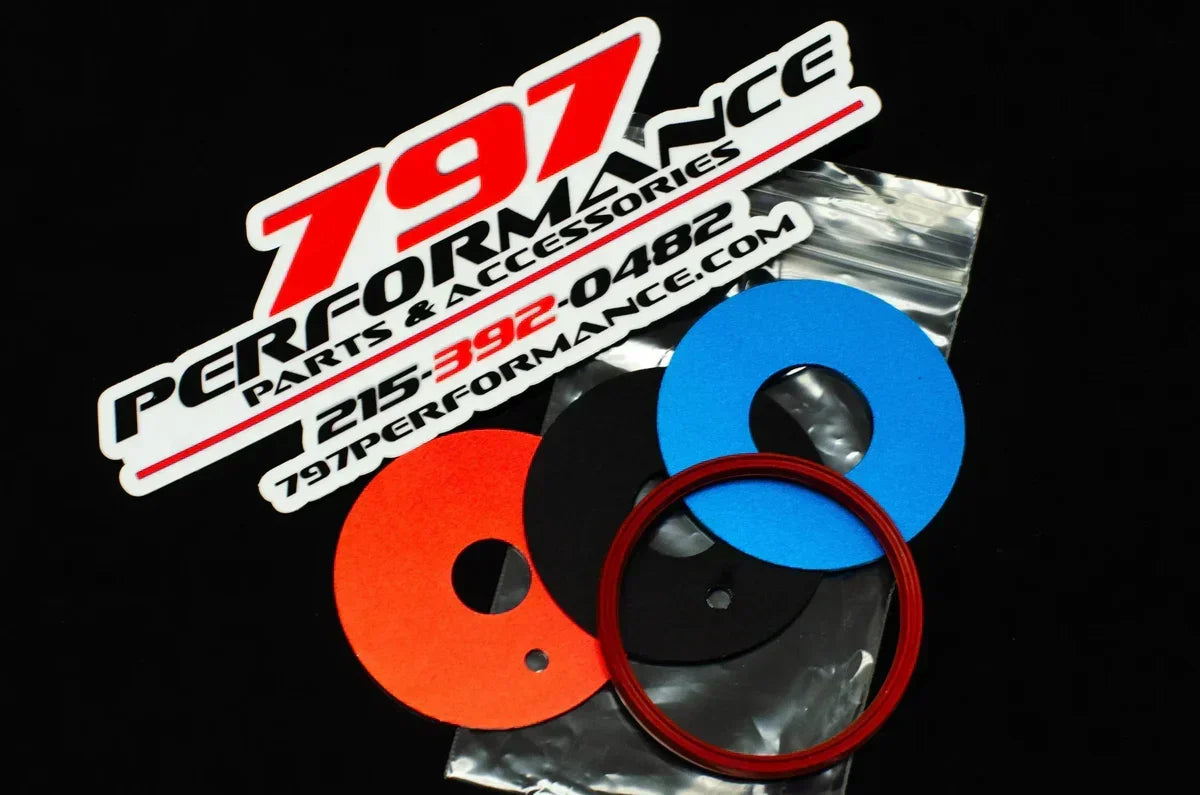
With properly adjusted fan settings, we recommend starting with the middle-size controller (Black) and then moving up or down in size based on the vehicle’s actual operating temperatures. In many applications, the middle-size controller results in coolant temperatures around 185F when the fan settings are properly configured.
However, water pump brand, water pump design, pulley sizes, engine RPM, radiator configuration, and other modifications can affect water-pump impeller speed and overall coolant flow. There is no blanket answer that applies to every vehicle. Start with the Black controller, monitor actual coolant temperatures, and adjust the controller size as necessary.
Will warm-up be affected, and will you have heat?
Yes, warm-up can take somewhat longer because coolant is continuously circulating through the system. However, with proper fan tuning, the cooling fans will remain off until the programmed temperature thresholds are reached, allowing the engine to come up to operating temperature normally. On particularly cold days, warm-up may take longer. Once again, proper fan tuning is important.
Cabin heat will continue to function normally. We have tested these controllers extensively during winter operation. As with overall cooling-system performance, tuning plays an important role in the warm-up cycle and operating temperature.
Coolant Temperature Changes:
It is normal to see coolant temperature fluctuate slightly when coming to a stop, transitioning between driving conditions, idling, or driving the vehicle hard. Small changes—typically around 10 degrees or less—are normal as vehicle speed, engine load, coolant flow, airflow through the radiator, and fan operation change.
Installation notes:
Install the flow controller in the same location as the factory thermostat. Clock the controller so the integrated bleed hole is positioned at 12 o’clock. Properly fill and bleed the cooling system after installation. Do not operate the vehicle with the flow controller without the appropriate fan tuning.
Beware of knockoffs:
Genuine 797 Performance cooling system flow controllers are manufactured from 6061-T6 heat-treated aluminum and anodized for surface and wear protection. Our controllers are color-coded for size identification, and we intentionally do not laser-etch the controller size into the anodized surface. Laser marking can compromise the protective anodized layer in the marked area, potentially exposing the aluminum underneath to oxidation and deterioration over time.
Always purchase the original 797 Performance flow controller. Genuine controllers are available directly from 797 Performance and through our official Amazon and eBay listings. When purchasing through a marketplace, verify that the seller is 797 Performance.
This product is for off-road / racing use only!
Everything you need to know about our cooling system flow controllers